
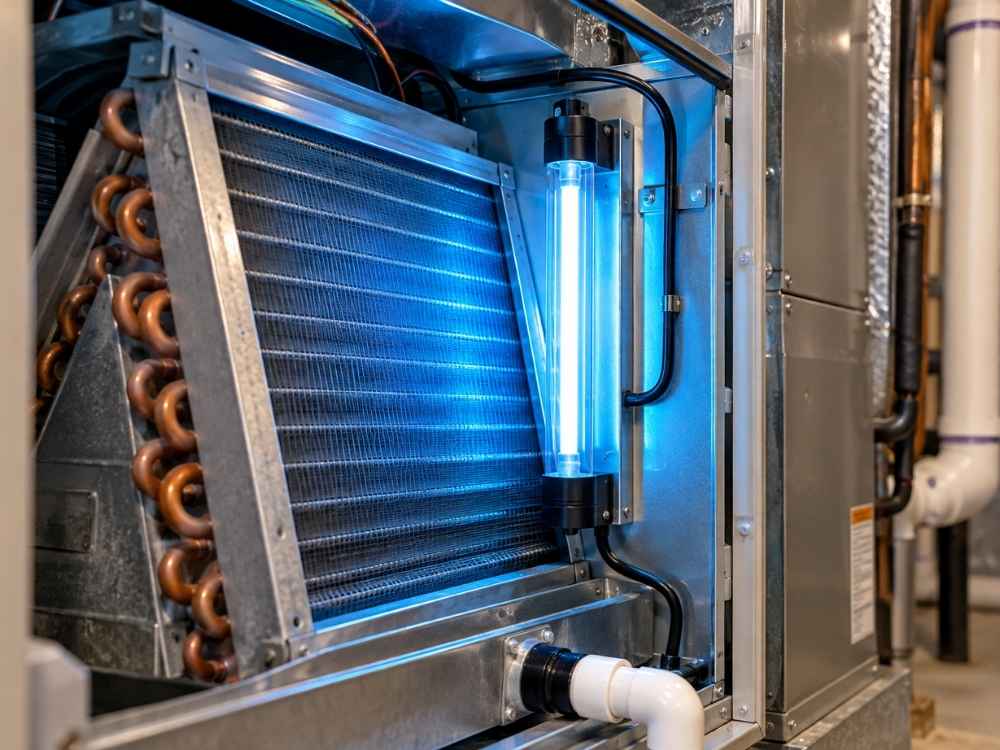
UV light installation can be a useful way to support indoor air quality by helping control certain microorganisms inside an HVAC system. When properly selected and installed, ultraviolet germicidal irradiation (UVGI) can help limit microbial growth on air conditioning coils and, with appropriately designed equipment, inactivate certain airborne microorganisms. However, UV lights do not remove dust, replace air filters, or solve every indoor air quality problem.
For homeowners in Holland, Michigan, and nearby communities, understanding how HVAC UV lights work can help determine whether this technology is a worthwhile addition to an existing heating and cooling system. Refresh Property Maintenance Services (Refresh PMS) lists UV light installation among its indoor air quality services, alongside advanced filtration systems and air quality testing.
What Is UV Light Installation in an HVAC System?
HVAC UV light installation involves placing a specially designed ultraviolet lamp inside an air handler, near an evaporator coil, or in another suitable location within a ventilation system. The lamp emits ultraviolet energy intended to affect microorganisms exposed to it.
Germicidal UV systems commonly use UV-C wavelengths to damage the genetic material of microorganisms, preventing them from reproducing effectively. The results depend on the equipment, UV intensity, exposure time, placement, airflow, and the organism being targeted.
In residential applications, UV lights are generally used for two different purposes:
- Coil treatment: A UV lamp shines on the evaporator coil or nearby surfaces to help control microbial growth in areas that can remain damp during cooling.
- Air treatment: A specially designed system exposes moving air to sufficient UV energy to inactivate certain airborne microorganisms as they pass through the treatment area.
These purposes are not interchangeable. A lamp designed to keep a coil cleaner is not automatically powerful enough to disinfect air moving through the ductwork. Choosing the correct equipment for the intended purpose is essential.
How Can UV Lights Help Improve Indoor Air Quality?
Indoor air quality depends on several factors, including ventilation, filtration, humidity, cleanliness, and the condition of the HVAC equipment. UV light can complement these measures when a suitable application exists.
1. Helping Control Microbial Growth on Cooling Coils
An air conditioning evaporator coil becomes cold as it removes heat from indoor air. Moisture can collect on its surface, creating conditions in which some microorganisms may grow.
A properly positioned coil-treatment UV lamp can help limit microbial growth on surfaces that receive adequate UV exposure. This may support cleaner HVAC components and help reduce certain maintenance concerns.
However, UV light does not remove accumulated dust, repair a blocked condensate drain, or eliminate the need to clean a dirty coil. Routine HVAC inspection and maintenance remain important.
2. Supporting Air Treatment
Some UV systems are designed to treat air as it moves through an HVAC unit or duct. When the equipment provides an appropriate UV dose, it can inactivate certain microorganisms passing through the treatment zone.
Effectiveness depends on exposure time and system design. Fast-moving air, insufficient lamp output, poor placement, and inadequate exposure can limit results.
Homeowners should therefore ask whether a proposed UV light is intended for surface treatment, air treatment, or both. The answer helps set realistic expectations about what the installation can accomplish.
3. Complementing an Indoor Air Quality Plan
UV treatment works best as one part of a broader indoor air quality strategy. Proper filtration, sufficient outdoor air ventilation, moisture control, and regular HVAC maintenance all play important roles.
For example, a homeowner concerned about a musty smell near the air conditioner may benefit more from investigating a dirty coil, a drainage problem, or excess moisture before purchasing additional equipment.
A UV light may be appropriate in some situations, but identifying the underlying issue should come first.
The CDC explains that germicidal ultraviolet systems can supplement ventilation and other air-cleaning measures, but they do not replace required ventilation or filtration.
When Should You Consider UV Light Installation?
UV light installation may be worth discussing with an HVAC professional if you have a specific indoor air quality or equipment-maintenance concern.
Consider these situations:
- Recurring microbial growth on HVAC surfaces: A professional can inspect the coil and surrounding components to determine whether surface-treatment UV lighting is appropriate.
- Persistent moisture-related concerns: Before adding equipment, investigate condensate drainage, humidity levels, and possible water leaks.
- A desire for additional air treatment: If airborne microorganisms are a concern, ask about a properly designed air-treatment system and how it would complement existing ventilation and filtration.
- An indoor air quality upgrade: UV lighting may be one option to consider alongside better filtration, ventilation improvements, and air quality testing.
- A new HVAC installation or system upgrade: Planning for UV treatment during an HVAC project may make it easier to evaluate equipment compatibility and appropriate placement.
UV lighting is not necessary for every home. If your HVAC system is well maintained, moisture is controlled, and filtration is suitable, the additional benefit may be limited. A professional assessment can help determine whether the investment addresses an actual need.
What Happens During HVAC UV Light Installation?
The installation process varies depending on the equipment and the design of the heating and cooling system. A qualified professional should assess the system before recommending a specific product or installation location.
Step 1: Evaluate the Existing HVAC System
The first step is to inspect the air handler, evaporator coil, available installation space, electrical connections, and existing filtration setup.
The professional should also ask about your concerns. Are you trying to control microbial growth on the coil, improve air treatment, or investigate an ongoing indoor air quality issue?
Defining the goal helps prevent purchasing a system that does not address the problem.
Step 2: Select the Appropriate UV Equipment
Different UV lamps serve different purposes. The appropriate equipment depends on the intended application, HVAC configuration, exposure requirements, and manufacturer specifications.
Ask the installer to explain:
- Whether the unit is designed for coil treatment or air treatment.
- Which components or airflow areas it will affect.
- Whether the equipment is compatible with your HVAC system.
- What maintenance and replacement parts will be required.
- What safety precautions apply to the particular model.
It is also important to confirm that the lamp and its installation method are suitable for the materials inside the air handler. Some materials can deteriorate under prolonged UV exposure.
Step 3: Install the Lamp in a Suitable Location
A UV lamp must be positioned so that it provides the intended exposure while avoiding unsafe radiation exposure to occupants and technicians.
Installation may involve mounting the lamp near the evaporator coil or integrating an air-treatment device into an appropriate section of the HVAC equipment. Electrical connections, access panels, and safety interlocks should follow the manufacturer’s instructions and applicable requirements.
UV-C radiation can injure the eyes and skin. A lamp should not be installed in a way that exposes people to germicidal radiation during normal operation.
Step 4: Test the System and Explain Its Operation
After installation, the technician should verify that the unit operates correctly and that safety features work as intended. The homeowner should receive instructions covering normal operation, power isolation, cleaning, lamp replacement, and warning indicators where applicable.
Ask for the manufacturer’s maintenance schedule and written details about any warranties. These details make it easier to keep the equipment working as intended.
How Much Does UV Light Installation Cost?
The cost of HVAC UV light installation depends on the type of equipment, the complexity of the installation, the HVAC system’s configuration, and any additional electrical or mechanical work required.
A basic coil-treatment installation may have different costs from a more powerful air-treatment system. Equipment specifications and maintenance requirements also affect the overall value.
Rather than relying on a generic price estimate, request a quote based on your actual HVAC system.
Before approving an installation, ask for a breakdown of:
- The UV equipment and included components.
- Labor and any necessary modifications.
- Electrical work, if required.
- Replacement lamp costs and recommended intervals.
- Warranty coverage and ongoing maintenance expenses.
Refresh PMS states on its official website that it offers free, no-obligation estimates and emphasizes transparent pricing. Homeowners can ask the company whether their particular UV light installation requirements are suitable for a quote.
Do HVAC UV Lights Remove Dust, Odors, and Allergens?
No. UV lights are not a substitute for air filtration, and their effects depend on what they are designed to treat.
Understanding these differences helps homeowners choose the right solution.
| Indoor air concern | What UV lights can and cannot do |
|---|---|
| Dust and airborne particles | UV lights do not physically filter out dust. Appropriate HVAC filters help capture particles. |
| Pollen and pet dander | UV lights do not remove these allergens. Suitable filtration is the primary approach. |
| Microbial growth on coils | Properly installed coil-treatment UV may help control growth on exposed surfaces. |
| Airborne microorganisms | Suitable air-treatment UV can inactivate certain microorganisms when the dose is adequate. |
| Musty odors | UV may help with certain biological sources, but odors can also come from drainage issues, dirt, or other sources that require investigation. |
| Chemical fumes and volatile organic compounds | Standard germicidal UV lighting is not a general-purpose solution for chemical pollutants. Source control and appropriate ventilation are important. |
If dust or allergens are your primary concern, consider discussing filter efficiency and HVAC compatibility with a professional. The CDC recommends checking filtration performance, proper filter fit, and ventilation when improving air cleanliness.
You can also explore Refresh PMS indoor air quality services, which include advanced filtration systems and air quality testing alongside UV light installation.
Are HVAC UV Lights Safe?
UV lights can be used safely when the equipment is appropriately designed, installed, and maintained. However, germicidal UV-C radiation can damage exposed eyes and skin, so safety precautions are essential.
Before installation, confirm that:
- The lamp is enclosed or positioned to prevent unintended exposure.
- Access panels and safety interlocks are correctly configured where provided.
- The equipment is installed according to the manufacturer’s instructions.
- Anyone servicing the system knows how to isolate power before accessing the lamp.
- Replacement lamps are compatible with the original equipment.
- The selected device does not introduce unwanted ozone into the indoor environment.
Never look directly at an operating germicidal UV lamp or expose your skin to its radiation. Turn off and isolate the power according to the manufacturer’s instructions before maintenance.
The U.S. EPA’s indoor air quality guidance also cautions that some air-treatment technologies can generate ozone, a lung irritant. Choose equipment carefully and verify its safety information rather than assuming every UV product has the same characteristics.
How Often Do HVAC UV Lights Need Maintenance?
Maintenance requirements vary by model and application. A UV system should not be treated as maintenance-free simply because it has few moving parts.
Follow the manufacturer’s instructions for inspecting and replacing the lamp. Some lamps continue to glow even when their germicidal output has declined, so visible light alone is not a reliable indicator of performance.
Typical maintenance considerations include:
- Checking lamp operation and any status indicators.
- Replacing the lamp at the manufacturer’s recommended interval.
- Cleaning components only as directed and with power safely isolated.
- Inspecting electrical connections and mounting hardware.
- Continuing regular HVAC filter changes and system maintenance.
- Checking for moisture, drainage problems, or dirt that UV lighting cannot resolve.
For homeowners in Michigan, it can be convenient to discuss UV lamp maintenance during scheduled heating and cooling service. Refresh PMS recommends routine HVAC maintenance at least twice a year on its website, making seasonal service a practical opportunity to ask about the condition of an installed UV system.
How Do You Choose an HVAC Contractor for UV Light Installation?
Choosing the right contractor is just as important as choosing the equipment. A suitable system needs to match your HVAC setup, indoor air quality goals, and maintenance expectations.
When evaluating an installer, consider the following questions:
Does the contractor explain the intended benefit? The installer should distinguish between treating coil surfaces and treating moving air rather than presenting every UV lamp as an all-purpose air purifier.
Will the existing system be inspected? Equipment compatibility, available space, airflow, and electrical requirements should be considered before a recommendation is made.
Are safety and manufacturer instructions addressed? Ask how the installation will prevent UV exposure and whether the equipment is suitable for the materials inside your system.
Are costs and maintenance clear? A written quote should identify equipment, labor, replacement requirements, and relevant warranty terms.
Is the contractor transparent about limitations? UV lights should not be presented as a guaranteed way to prevent illness, eliminate all microorganisms, or replace filtration and ventilation.
Refresh PMS identifies itself as a family-owned property maintenance business serving Holland, Michigan, and nearby communities. Its website describes an approach based on consultation, clear estimates, skilled workmanship, and a final walkthrough. Those stated service principles provide a useful starting point when discussing a potential indoor air quality project, although they do not establish a specific history of UV installations.
Why Consider Refresh PMS for UV Light Installation in Holland, MI?
Homeowners considering HVAC UV light installation can benefit from working with a provider that offers related heating, cooling, and indoor air quality services.
Refresh Property Maintenance Services lists UV light installation, advanced filtration systems, and air quality testing as part of its service offering. Having these options available makes it possible to ask about different approaches rather than assuming UV lighting is the only answer.
For example, a homeowner who notices recurring moisture around an air conditioning coil may need an inspection of the coil and drainage system before deciding whether UV treatment is appropriate. Someone primarily concerned about dust may need to focus on filtration instead. The right recommendation depends on the problem being addressed.
Refresh PMS also states that it provides free estimates and serves Holland, MI, and surrounding areas. You can learn more through the official website or use its contact page to ask about your HVAC and indoor air quality needs.
Frequently Asked Questions About UV Light Installation
Q. What is the main purpose of an HVAC UV light?
A. An HVAC UV light can help control microbial growth on exposed components or inactivate certain airborne microorganisms, depending on the system’s design. It does not replace air filtration or ventilation.
Q. Can UV light installation help with mold on an air conditioning coil?
A. A properly selected coil-treatment lamp can help limit microbial growth on exposed coil surfaces. However, existing contamination, excess moisture, and drainage problems may still require cleaning or repairs.
Q. How long does HVAC UV light installation take?
A. Installation time depends on the equipment, HVAC configuration, electrical requirements, and any modifications needed. Ask the contractor for an estimate after the system has been inspected.
Q. Do HVAC UV lights need to be replaced?
A. Yes. UV lamps have a limited service life, and their effective germicidal output can decline over time. Follow the manufacturer’s replacement schedule and maintenance instructions.
Q. Are UV lights enough to improve indoor air quality on their own?
A. No. Indoor air quality usually requires a combination of appropriate filtration, ventilation, moisture control, source management, and regular HVAC maintenance. UV treatment can provide an additional benefit in suitable applications.
Schedule an Indoor Air Quality Consultation With Refresh PMS
UV light installation can be a useful addition to an HVAC system when the equipment is selected for the right purpose and installed safely. The key is to understand whether your priority is controlling microbial growth on HVAC surfaces, treating moving air, or addressing another indoor air quality concern.
Before investing in UV technology, have your existing system evaluated and compare the available options. Proper filtration, moisture control, and routine maintenance remain essential regardless of whether a UV lamp is installed.
If you live in Holland, Zeeland, or a nearby West Michigan community, contact Refresh Property Maintenance Services to discuss your HVAC needs and ask about UV light installation, filtration, and air quality testing. A consultation can help you understand which options are appropriate for your home, what the installation involves, and what ongoing maintenance to expect.